-
Ganesh Talkies, Kolkata
Ganesh Talkies, Kolkata
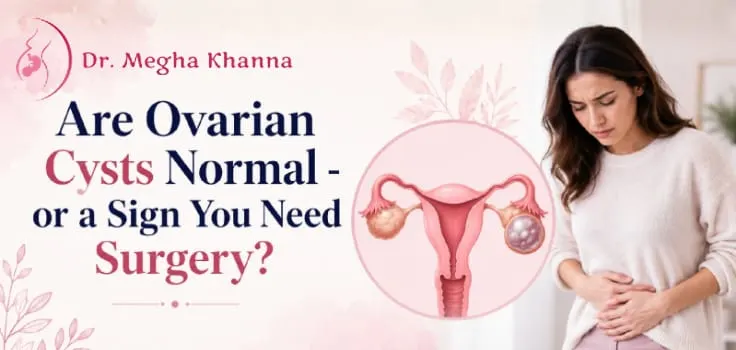
Which ovarian cysts are normal and when is surgery required? Many ovarian cysts are harmless and resolve naturally, while others signal risk. Early evaluation by the best lady gynecologist in Kolkata helps distinguish normal cysts from those needing treatment or surgery.
Best Lady Gynecologist in Kolkata Explains Ovarian Cysts
Which ovarian cysts are normal and when is surgery required? According to the best lady gynecologist in Kolkata, most cysts are functional and harmless. However, persistent pain, rapid growth, or suspicious features may demand prompt medical or surgical care.
An ovarian cyst is a fluid-filled pocket that forms either inside or on the ovary. The best lady gynecologist in Kolkata classifies them as functional or pathological. Functional cysts usually resolve within menstrual cycles, while pathological cysts may require monitoring or surgery.
The best lady gynecologist in Kolkata reassures that these often disappear within 6–8 weeks without intervention.
Which ovarian cysts are normal and when is surgery required becomes critical when cysts show red flags:
Persistent or symptomatic cysts should be evaluated by the best lady obstetrician in Kolkata.
Consult the best lady gynecologist in Kolkata immediately if you experience:
These signs help answer which ovarian cysts are normal and when is surgery required.
Surgery may be advised when:
The best lady gynecologist in Kolkata uses ultrasound, Doppler studies, and tumor markers before recommending surgery.
Which ovarian cysts are normal and when surgery is required depends on age, symptoms, fertility goals, and imaging findings.
Dr Megha Khanna is widely regarded as one of the best lady gynecologists in Kolkata, known for evidence-based management of ovarian cysts.
Her approach focuses on preserving fertility while ensuring safety.
The best lady gynecologist in Kolkata follows international guidelines. Studies show most functional cysts resolve spontaneously, while complex cysts need surgical evaluation to prevent complications.
Ovarian cysts are fluid-filled sacs on or inside the ovary, and in many cases, they are a normal part of the menstrual cycle. Functional cysts—such as follicular or corpus luteum cysts—often form during ovulation and usually resolve on their own within a few menstrual cycles without treatment. These are typically small, painless, and discovered incidentally during routine scans.
Concern arises when cysts persist, grow larger, or cause symptoms. Warning signs include severe pelvic pain, bloating, pain during intercourse, irregular periods, or sudden sharp pain accompanied by nausea—possible indicators of torsion or rupture. Complex cysts, solid components, rapid growth, or cysts occurring after menopause require closer evaluation.
Doctors assess cysts based on size, appearance on ultrasound, symptoms, age, and hormonal background. Blood tests, serial imaging, and symptom tracking help determine whether observation, medication, or surgery is appropriate. Surgical intervention is usually advised when a cyst is suspicious, painful, larger than expected, or not responding to conservative management.
From a topical authority standpoint, understanding ovarian cysts links closely with hormonal balance, fertility health, PCOS, endometriosis, and minimally invasive gynecologic surgery, helping women make informed decisions rather than assuming every cyst means surgery.
Which ovarian cysts are normal and when surgery is required can often be clarified with careful follow-up.
Not every ovarian cyst is dangerous. Understanding which ovarian cysts are normal and when surgery is required empowers women to seek timely care. With expert guidance from Dr Megha Khanna, the best obstetrician-gynecologist in Jorashanko, women can choose safe, fertility-preserving treatment with confidence.
1.When does an ovarian cyst need surgery?
An ovarian cyst may need surgery if it is large, painful, persistent, growing, or shows suspicious features on ultrasound.
2.Do all ovarian cysts require surgical removal?
No, most ovarian cysts are harmless and resolve on their own without surgery, especially functional cysts.
3.What size ovarian cyst usually requires surgery?
Surgery is commonly considered if a cyst grows larger than 5–7 cm or causes significant symptoms.
4.Which symptoms indicate an ovarian cyst may need surgery?
Severe pelvic pain, bloating, irregular periods, pain during intercourse, or sudden sharp pain may signal the need for surgery.
5.Who decides if ovarian cyst surgery is necessary?
A lady gynecologist evaluates symptoms, scan results, age, and health history to decide if surgery is required.


